Real Madrid CF: The Ultimate Guide
Real Madrid CF: The Ultimate Guide
For over a century, Real Madrid CF has defined football excellence, earning the prestigious title of FIFA’s Best Club of the 20th Century . The club’s all-white kit represents a standard of success that transcends sport, built on a foundation of legendary players, record-breaking triumphs, and an unyielding winning mentality.
This comprehensive guide explores the rich history, iconic figures, and modern evolution that make Real Madrid the most successful football club in European history. From the legendary Santiago Bernabéu to the new era under Xabi Alonso, you will discover what truly sets Los Blancos apart.
The Glorious History of Real Madrid CF
Real Madrid’s journey began on 6 March 1902, when the first Board of Directors of the Madrid Foot Ball Club was officially elected . The club quickly established itself as a dominant force in Spanish football, becoming a founding member of La Liga in 1929. A defining moment arrived in 1920 when King Alfonso XIII granted the club the honorific title ‘Real’ (Royal), a symbol of its enduring prestige.
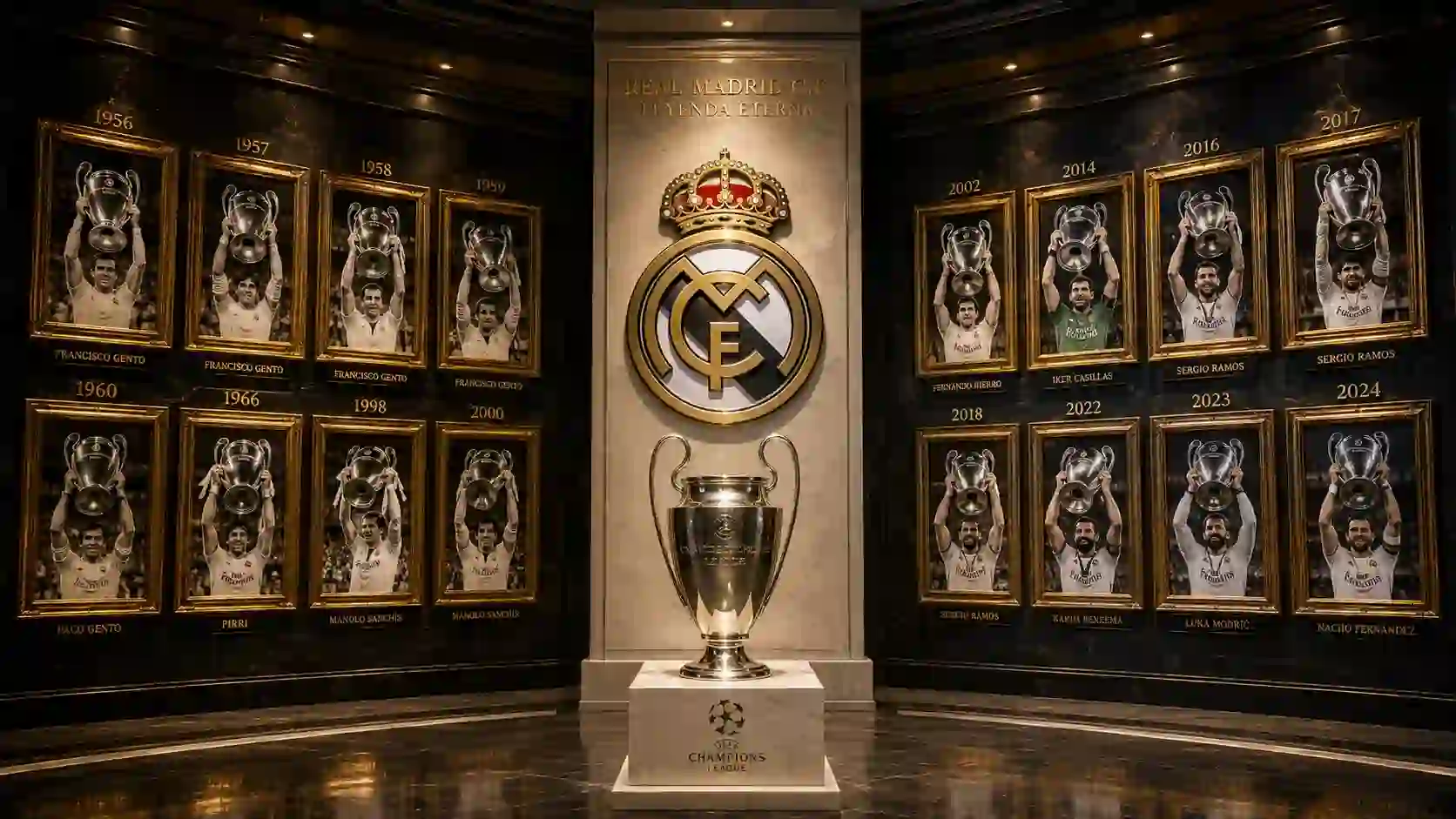
The true genesis of the club’s global legend, however, began in the 1950s under the presidency of Santiago Bernabéu. With legendary players like Alfredo Di Stéfano, Ferenc Puskás, and Paco Gento, Real Madrid won the first five European Cups in a row between 1956 and 1960 . This unprecedented achievement permanently cemented the club’s status as the kings of Europe and set the standard for generations to come.
A Record-Breaking Trophy Cabinet
No other club can match the silverware accumulated by Real Madrid. Their trophy cabinet is a testament to sustained excellence over decades of competition, showcasing a level of success that is the benchmark for global football . It includes:
International Dominance
- 15 European Cups / UEFA Champions Leagues (a record)
- 9 FIFA Club World Cups (a record)
- 6 UEFA Super Cups
- 2 UEFA Cups
Domestic Supremacy
- 36 La Liga Titles (a record)
- 20 Copas del Rey
- 13 Spanish Super Cups
- 1 Copa de la Liga
The Galácticos Era and Global Superstars
Real Madrid CF is synonymous with a philosophy of signing the world’s greatest footballing talent, a policy famously known as the ‘Galácticos’ era . This strategy, first pioneered by club president Florentino Pérez, saw the likes of Luís Figo, Zinedine Zidane, Ronaldo Nazário, and David Beckham all don the famous white shirt, elevating the club’s global brand to unprecedented heights.
The policy continued to deliver record-breaking signings, with the arrival of Cristiano Ronaldo from Manchester United in 2009 for a then-world-record fee. Ronaldo would go on to become the club’s all-time top goalscorer, leading a new generation of Galácticos that also included Kaká and later, Gareth Bale and James Rodríguez.
The Modern Era and La Décima
The crowning achievement of the modern era was the relentless pursuit of ‘La Décima’—the club’s tenth European Cup. After years of near misses, it was finally secured in 2014 under manager Carlo Ancelotti, who defeated Atlético Madrid in the final. This victory sparked another period of unprecedented European dominance.
Led by Zinedine Zidane, the club won three consecutive Champions League titles from 2016 to 2018, becoming the only club to achieve this feat in the modern format . More recently, Ancelotti’s second spell has brought further success, including a 14th and 15th European Cup, the latter won in 2024 at Wembley Stadium against Borussia Dortmund . This trophy haul firmly established Real Madrid as the undisputed masters of European football.
Club Legends: From Di Stéfano to Ronaldo
The history of Real Madrid CF is written by its legendary players. Alfredo Di Stéfano is widely considered one of the greatest footballers of all time, having been the architect of the club’s first five European Cup triumphs alongside Ferenc Puskás . Their names are etched in the club’s DNA.
The lineage of legends continued through the generations. Paco Gento, the only player to have won the European Cup six times, stood as a symbol of the club’s golden era. Later, players like the ‘Ye-Ye’ team, Raúl González, and Iker Casillas became the standard-bearers for a new generation . The history page is also adorned with the achievements of Zinedine Zidane, Ronaldo Nazário, Roberto Carlos, and the record-breaking goals of Cristiano Ronaldo.
The Home of the Whites: Santiago Bernabéu Stadium
The Santiago Bernabéu Stadium is not just a football ground; it is a monument to Real Madrid’s greatness. Inaugurated in 1947, it has been the scene of the club’s most iconic moments. The stadium’s legendary atmosphere, generated by the passionate Madridista fans, has inspired countless victories.
Today, the Bernabéu is undergoing a spectacular transformation. The modernization project includes a state-of-the-art retractable pitch and a fully covered roof, turning the stadium into a year-round entertainment venue and a futuristic landmark in Madrid. It remains an unmissable pilgrimage site for football fans from all over the world .
Tactical Evolution: Xabi Alonso’s New Era
A new chapter in the club’s storied history began when Xabi Alonso was appointed as manager for the 2025/26 season. The former midfielder has implemented a significant tactical shift, moving away from the more pragmatic style of his predecessor, Carlo Ancelotti, to embrace a high-intensity, pressing-based system .
Alonso’s philosophy, which he perfected at Bayer Leverkusen, emphasizes coordinated pressing, structured build-up play, and collective defensive responsibility. The data shows that Real Madrid now register significantly more high recoveries and cover more ground per game . This evolution represents a bold new era for Real Madrid CF, building on the club’s DNA of attacking flair while modernising its approach.
Key Tactical Differences: Ancelotti vs. Alonso
- Approach: Ancelotti was pragmatic and reactive, focusing on individual brilliance in transitions. Alonso is proactive, enforcing a collective system with coordinated pressing and high possession.
- Pressing: Ancelotti alternated between pressing and containment. Alonso demands sustained, high-intensity pressing and quick ball recoveries .
- Style: Ancelotti’s team leaned on patience and counter-attacks. Alonso’s side is built on intense pressure, quick transitions, and a higher defensive line .
El Clásico and Other Major Rivalries
No discussion of Real Madrid CF is complete without mentioning its intense rivalries. The most famous is El Clásico, the fixture against FC Barcelona. This match transcends sport, representing a historic cultural and political clash between Spain’s two largest cities. It is one of the most watched and anticipated sporting events globally.
Another fierce rivalry is El Derbi Madrileño against Atlético Madrid. The rivalry is more local and visceral, adding a layer of city pride to the competition. These fixtures often have significant implications for the La Liga title race, adding immense pressure and drama to the proceedings.
The Real Madrid Academy: La Fábrica
While renowned for signing Galácticos, Real Madrid is equally proud of its world-class youth academy, La Fábrica. The academy is a cornerstone of the club’s identity, dedicated to developing young talent and instilling the club’s philosophy from a young age.
La Fábrica has produced countless legends who have gone on to define the club’s history, including Iker Casillas, Raúl González, and more recently, Dani Carvajal and Federico Valverde. This commitment to homegrown talent ensures the club’s values are passed down through the generations and provides a cost-effective way to build a squad.
Financial Powerhouse: The Most Valuable Club
Real Madrid is not just a titan on the pitch but also a financial powerhouse off it. In 2024, it was estimated to be the world’s most valuable football club, with a worth of $6.6 billion, and became the first football club to generate over €1 billion in revenue in a single year .
This financial strength is fueled by the club’s immense global fanbase, lucrative commercial partnerships, and matchday revenue from the renovated Santiago Bernabéu. This economic power allows Real Madrid to continue competing for the world’s best players and maintaining its status as a global super-brand.
Real Madrid CF: Beyond Football
The influence of Real Madrid CF extends well beyond the football pitch. The club is a multi-sport institution, with its professional basketball team also being one of the most successful in Europe, having won 11 European Cups . The Real Madrid brand is a global phenomenon.
With a massive social media following and a legion of fans across every continent, the club is a major cultural force. It represents a set of values including excellence, ambition, and a winning mentality that resonates with millions of people around the world, making it much more than just a football club.
6 FAQs About Real Madrid CF
1. When was Real Madrid CF founded?
Real Madrid CF was officially founded on 6 March 1902, when its first Board of Directors was elected, initially under the name Madrid Football Club .
2. How many European Cups/Champions Leagues has Real Madrid won?
Real Madrid has won a record 15 European Cup/UEFA Champions League titles, the most recent of which was in 2024 at Wembley Stadium .
3. Who is the all-time top goalscorer for Real Madrid?
The all-time top goalscorer for Real Madrid is Cristiano Ronaldo, who scored an incredible 450 goals during his time at the club .
4. What is the name of Real Madrid’s home stadium?
Real Madrid plays its home matches at the Santiago Bernabéu Stadium. It has been the club’s home since 1947 and is currently undergoing a major modernization project .
5. What is the ‘Galácticos’ policy?
The ‘Galácticos’ policy is Real Madrid’s strategy of signing the world’s most famous and talented footballers to create a superstar team, helping to build a powerful global brand and deliver on-field success .
6. What is El Clásico?
El Clásico is the name for the match between Real Madrid and its fierce rival, FC Barcelona. It is one of the most intense and celebrated derbies in world football, representing a historic rivalry between Spain’s two biggest cities.
The Future of Real Madrid CF
As Real Madrid looks to the future, it stands on a foundation of unparalleled success. The club’s ability to adapt and evolve, as seen in the tactical shift under Xabi Alonso, demonstrates a commitment to remaining at the pinnacle of world football. With a rebuilt Bernabéu, a squad blending established stars and exciting young talent from La Fábrica, and a winning culture, the future looks as bright as ever.
 Match Stats
Jacksonville Jaguars vs Bengals Match Player Stats: Full Game Analysis
You just watched a hard-fought NFL battle. Now you want the cold, clear numbers that...
 Match Stats
Chicago Bears vs Bengals Match Player Stats & Highlights
Chicago Bears vs Bengals Match Player Stats: A Complete Breakdown Football fans love a high-scoring,...
 Match Stats
San Antonio Spurs vs Knicks Match Player Stats: Full Box Score & Game Analysis
Few regular-season NBA games turn into instant classics that fans discuss for years. When the...