
Atlanta Falcons vs Washington Commanders Match Player Stats (Full Game Breakdown)
Atlanta Falcons vs Washington Commanders Match Player Stats
This complete guide explains the atlanta falcons vs washington commanders match player stats from the Falcons’ 34–27 win on September 28, 2025. You’ll get the full passing, rushing, receiving, special teams, and key-moment story in very simple words. Everything is written to feel like a natural conversation, while still giving you the deep details you came for.
Quick Match Snapshot
The Falcons won 34–27 in a game that felt close late, but Atlanta had the stronger overall control. The early 10–0 start mattered because it set the pace and forced Washington to play catch-up. Both teams had moments, but Atlanta stayed on the field longer and created bigger plays through the air. When you look at the atlanta falcons vs washington commanders match player stats, the biggest theme is simple: Atlanta’s offense produced more explosive gains, while Washington had to work harder for every drive.
The scoring by quarter also tells a clean story. Atlanta built a lead in the first half, stretched it in the third quarter, and then protected it with a long fourth-quarter drive that ended in a field goal. Washington rallied in the fourth quarter, but the comeback started too late. That is why this game is remembered as a strong overall Atlanta performance with a dramatic finish.
| Team | 1st | 2nd | 3rd | 4th | Total |
|---|---|---|---|---|---|
| Commanders | 0 | 10 | 6 | 11 | 27 |
| Falcons | 10 | 7 | 14 | 3 | 34 |
Team Stats That Explain the Game
Team stats are the fastest way to understand what really happened. Atlanta finished with 435 total yards, while Washington had 294. That is a wide gap, and it usually leads to a win unless turnovers flip the game. Time of possession also leaned Atlanta, with the Falcons holding the ball for 34:15 compared to Washington’s 25:45. When a team keeps the ball that long, it controls tempo and keeps the other offense colder on the sideline.
The third-down numbers were even more telling. Washington went 1-for-8 on third down. Atlanta went 6-for-12. That difference means Atlanta had more drives with extra chances, more plays, and more room to set up touchdowns. In the atlanta falcons vs washington commanders match player stats, this third-down gap is one of the cleanest reasons the final score ended the way it did.
| Category | Commanders | Falcons |
|---|---|---|
| Total Yards | 294 | 435 |
| Net Pass Yards | 147 | 307 |
| Rush Yards | 147 | 128 |
| Plays | 51 | 64 |
| Yards Per Play | 5.8 | 6.8 |
| Time of Possession | 25:45 | 34:15 |
| 3rd Down | 1/8 | 6/12 |
| Turnovers | 1 | 1 |
One fun detail is that Washington actually ran the ball very efficiently. The Commanders averaged 6.7 yards per rush, which is excellent. But efficiency is not the same as finishing. Atlanta scored rushing touchdowns, while Washington did not. That is why the atlanta falcons vs washington commanders match player stats feel like a story of big Atlanta finishes versus Washington’s shorter bursts.
Passing Stats: Penix Jr. vs Mariota
Quarterback play was a major separator. Atlanta’s Michael Penix Jr. completed 20 of 26 passes for 313 yards, with 2 touchdowns and 1 interception. Washington’s Marcus Mariota finished 16 of 27 for 156 yards, with 2 touchdowns and 1 interception. Both threw two touchdown passes, but Penix created far more yardage and bigger gains. That is the cleanest difference inside these atlanta falcons vs washington commanders match player stats.
Another simple way to understand it is yards per attempt. Penix averaged about 12.0 yards per pass attempt, which is huge in the NFL. Mariota’s passing average was much lower. When a quarterback can hit chunk plays, it makes the field feel smaller. Drives become quicker. Defenses become stressed. And suddenly, running the ball becomes easier because linebackers have to worry about deep routes behind them.
| QB | Team | Comp/Att | Pass Yds | Pass TD | INT |
|---|---|---|---|---|---|
| Michael Penix Jr. | Falcons | 20/26 | 313 | 2 | 1 |
| Marcus Mariota | Commanders | 16/27 | 156 | 2 | 1 |
Atlanta Falcons Receiving Stats (Who Made the Damage)
Atlanta’s receiving production came from a few major names, which made the offense difficult to cover. Drake London caught 8 passes for 110 yards and scored a touchdown. Kyle Pitts added 5 catches for 70 yards and also scored. Then came the big swing: Bijan Robinson as a receiver. Robinson caught 4 passes for 106 yards, and one catch-and-run went for 69 yards. That is the kind of play that changes a whole drive in one moment.
This is why the atlanta falcons vs washington commanders match player stats feel so one-sided in the passing game. Atlanta did not rely on a single target. London punished defenders on timing routes. Pitts attacked the middle and the red zone. Robinson punished mismatches in space. When an offense can attack three different areas of the field in one quarter, defenders start guessing. And when defenders guess, big plays follow.
| Receiver | Team | Receptions | Receiving Yds | TD | Long |
|---|---|---|---|---|---|
| Drake London | Falcons | 8 | 110 | 1 | 21 |
| Bijan Robinson | Falcons | 4 | 106 | 0 | 69 |
| Kyle Pitts | Falcons | 5 | 70 | 1 | 26 |
Washington Commanders Receiving Stats (What Worked Best)
Washington’s passing totals were lower, but the team still had important scoring moments through the air. Deebo Samuel was the top target with 6 receptions for 72 yards and a touchdown. Luke McCaffrey scored too, finishing with 2 catches for 21 yards and a touchdown. Zach Ertz had 2 catches for 21 yards and became very important in the fourth quarter when the Commanders went for two and converted.
Here is the simple problem Washington faced: it could not consistently stay on the field long enough to pile up passing yards. The Commanders were stuck in a pattern of needing a few key plays per drive, instead of stacking first downs over and over. When you compare the atlanta falcons vs washington commanders match player stats, that is why the Falcons’ passing game looks so much larger. Atlanta sustained drives and also hit explosive plays. Washington had to chase efficiency on fewer chances.
| Receiver | Team | Receptions | Receiving Yds | TD | Long |
|---|---|---|---|---|---|
| Deebo Samuel | Commanders | 6 | 72 | 1 | 24 |
| Luke McCaffrey | Commanders | 2 | 21 | 1 | 16 |
| Zach Ertz | Commanders | 2 | 21 | 0 | 12 |
Rushing Stats: Efficiency vs Touchdowns
Washington’s rushing numbers were quietly impressive. The Commanders ran for 147 yards on 22 carries, which is 6.7 yards per rush. Chris Rodriguez Jr. led with 7 carries for 59 yards and a long run of 48. Jacory Croskey-Merritt added 7 carries for 47 yards. Mariota chipped in with 20 rushing yards on just two attempts. On many Sundays, that rushing efficiency is enough to win.
Atlanta’s rushing production looked different. The Falcons ran for 128 yards on 37 carries (about 3.5 per rush), which is not explosive. But Atlanta scored two rushing touchdowns. Bijan Robinson had 17 carries for 75 yards and a rushing score. Tyler Allgeier added 16 carries for 51 yards and a rushing score. In the atlanta falcons vs washington commanders match player stats, this is the clearest “finish” difference: Washington ran well, Atlanta scored.
| Runner | Team | Carries | Rush Yds | TD | Long |
|---|---|---|---|---|---|
| Bijan Robinson | Falcons | 17 | 75 | 1 | 18 |
| Tyler Allgeier | Falcons | 16 | 51 | 1 | 15 |
| Chris Rodriguez Jr. | Commanders | 7 | 59 | 0 | 48 |
| Jacory Croskey-Merritt | Commanders | 7 | 47 | 0 | 16 |
Turnovers and Ball Security
Turnovers can flip a game fast, but this matchup stayed mostly stable. Both teams finished with one interception thrown. Penix Jr. threw one pick, and Mariota threw one pick. There were fumbles, but neither team lost one. That matters because it keeps the game honest. When you do not hand over “free” points, the team that moves the ball better usually wins. And that is exactly what the atlanta falcons vs washington commanders match player stats show.
A simple way to think about it is this: if both teams share the same turnover count, the deciding factor becomes execution. Atlanta executed better on third down, had more total yardage, and hit more explosive plays. Washington did not collapse, but it did not get enough extra chances. That is why the late rally did not fully finish the job.
Third Downs, Fourth Downs, and Drive Life
A game can look close on the scoreboard but feel different on the field. That “feel” is usually third down. Washington went 1-for-8 on third down. That means many drives ended before the offense could settle into rhythm. Atlanta went 6-for-12. That is not perfect, but it is strong enough to keep possession, stack plays, and wear a defense down. If you are trying to understand the atlanta falcons vs washington commanders match player stats, these third-down numbers are a loud explanation.
Fourth down tells a story too. Washington went 2-for-2, which shows urgency and confidence in short-yardage calls. Atlanta went 1-for-1. Washington needed those fourth-down conversions because the offense was not extending drives on third down. Atlanta did not need as many risks because it already had the yardage advantage and could keep leaning on sustained drives.
| Down Type | Commanders | Falcons |
|---|---|---|
| 3rd Down | 1/8 | 6/12 |
| 4th Down | 2/2 | 1/1 |
Special Teams: Clean Kicking and Big Returns
Special teams were sharp, and that kept the scoring steady. Washington kicker Matt Gay went 4-for-4 on field goals with a long of 52, and he added an extra point too. Atlanta kicker Parker Romo went 2-for-2 on field goals and made all four extra points. When kickers are perfect, the margin for error shrinks. Every missed tackle, every busted coverage, and every big pass matters more.
Kick returns gave Washington hidden help. Luke McCaffrey returned 6 kickoffs for 199 yards and had a long return of 58. That kind of field position support can keep a comeback alive. Still, the Falcons had enough offense to answer. In the full atlanta falcons vs washington commanders match player stats, this becomes a story of Washington needing special teams help, while Atlanta created offense more directly through passing explosions.
| Special Teams Item | Commanders | Falcons |
|---|---|---|
| Field Goals | 4/4 (Long 52) | 2/2 (Long 38) |
| Extra Points | 1/1 | 4/4 |
| Key Kick Returner | McCaffrey: 6 KR, 199 yds (Long 58) | Team KR: 5, 128 yds |
Scoring Summary (Every Key Moment)
The scoring timeline helps you “feel” the game. Atlanta opened with a 38-yard field goal, then scored a passing touchdown to Drake London to build a 10–0 lead. Washington responded in the second quarter with a touchdown pass to Luke McCaffrey, but Atlanta answered with a Bijan Robinson rushing touchdown. Washington stayed close with field goals, but Atlanta landed a quick third-quarter touchdown pass to Kyle Pitts and later added a Tyler Allgeier rushing touchdown. That third quarter stretch created the cushion Atlanta needed.
In the fourth quarter, Washington made the biggest push. Mariota hit Deebo Samuel for a 24-yard touchdown, and the Commanders converted the two-point try to Zach Ertz. Atlanta then used a long drive to kick a 26-yard field goal, pushing the lead back up. Washington quickly answered with a 42-yard field goal, but time was running out. When you study the atlanta falcons vs washington commanders match player stats, this sequence is why the Falcons’ longer drives mattered so much late.
| Quarter | Time | Team | Play | Score After |
|---|---|---|---|---|
| 1st | 10:46 | ATL | Romo 38-yd FG | ATL 3–0 |
| 1st | 0:49 | ATL | Penix to London 5-yd TD (Romo XP) | ATL 10–0 |
| 2nd | 11:31 | WSH | Mariota to McCaffrey 5-yd TD (Gay XP) | ATL 10–7 |
| 2nd | 8:27 | ATL | Robinson 14-yd rush TD (Romo XP) | ATL 17–7 |
| 2nd | 5:24 | WSH | Gay 43-yd FG | ATL 17–10 |
| 3rd | 10:12 | WSH | Gay 52-yd FG | ATL 17–13 |
| 3rd | 9:25 | ATL | Penix to Pitts 7-yd TD (Romo XP) | ATL 24–13 |
| 3rd | 4:22 | WSH | Gay 41-yd FG | ATL 24–16 |
| 3rd | 0:14 | ATL | Allgeier 15-yd rush TD (Romo XP) | ATL 31–16 |
| 4th | 8:48 | WSH | Mariota to Deebo 24-yd TD + 2PT to Ertz | ATL 31–24 |
| 4th | 1:57 | ATL | Romo 26-yd FG | ATL 34–24 |
| 4th | 1:29 | WSH | Gay 42-yd FG | ATL 34–27 |
Biographic Table (Player Snapshot + Game Line)
Below is a clean “bio-style” table that summarizes the core names from the atlanta falcons vs washington commanders match player stats. It is built to be simple and fast to scan. If you are writing, editing, or comparing performance, this table gives you the main story in one view without forcing you to jump around.
| Player | Team | Role | Game Stat Line |
|---|---|---|---|
| Michael Penix Jr. | Falcons | QB | 20/26, 313 pass yds, 2 pass TD, 1 INT |
| Bijan Robinson | Falcons | RB | 17 rush, 75 rush yds, 1 rush TD; 4 rec, 106 rec yds |
| Drake London | Falcons | WR | 8 rec, 110 rec yds, 1 rec TD |
| Kyle Pitts | Falcons | TE | 5 rec, 70 rec yds, 1 rec TD |
| Tyler Allgeier | Falcons | RB | 16 rush, 51 rush yds, 1 rush TD |
| Marcus Mariota | Commanders | QB | 16/27, 156 pass yds, 2 pass TD, 1 INT |
| Deebo Samuel | Commanders | WR | 6 rec, 72 rec yds, 1 rec TD |
| Luke McCaffrey | Commanders | WR | 2 rec, 21 rec yds, 1 rec TD; 6 KR, 199 KR yds |
| Zach Ertz | Commanders | TE | 2 rec, 21 rec yds; caught 2-point conversion |
| Matt Gay | Commanders | K | 4/4 FG (Long 52), 1/1 XP |
| Parker Romo | Falcons | K | 2/2 FG (Long 38), 4/4 XP |
What These Stats Really Say (Simple Takeaways)
When you step back from the numbers, the story becomes very clear. Atlanta’s offense had the balance to attack in multiple ways, and it did not have to be perfect to win. Penix created explosive passing. London and Pitts finished key moments. Robinson produced huge yards from scrimmage. Even when Atlanta’s rushing average was not high, it still scored two rushing touchdowns, which is often the difference between a close win and a close loss.
Washington had bright points, especially rushing efficiency and strong kicking, but it could not consistently keep drives alive on third down. That forced the Commanders to rely on bursts instead of steady pressure. In the atlanta falcons vs washington commanders match player stats, you can see that Washington did not lack effort. It simply ran out of possessions and time. That is why the late rally felt exciting but still came up short.
FAQs
Who led the passing in the atlanta falcons vs washington commanders match player stats?
Michael Penix Jr. led all passers with 313 passing yards on 20-of-26 passing, plus 2 touchdowns and 1 interception. Marcus Mariota threw for 156 yards on 16-of-27 passing, also with 2 touchdowns and 1 interception. Both quarterbacks produced scoring throws, but Penix created far more yardage and more explosive gains, which is a major reason Atlanta finished with 34 points.
Who had the biggest all-around production?
Bijan Robinson delivered one of the biggest “do-everything” performances. He ran for 75 yards and scored a rushing touchdown. He also caught 4 passes for 106 yards. That is a massive total from one player. When a running back gives you big receiving yards, it forces defenders into tough choices, because you can no longer treat him like a normal runner.
Who were the top receiving leaders in the game?
Drake London led the Falcons with 110 receiving yards and a touchdown. Bijan Robinson had 106 receiving yards, and Kyle Pitts added 70 with a touchdown. For Washington, Deebo Samuel led with 72 receiving yards and a touchdown. These are the core names that shaped the passing story in the atlanta falcons vs washington commanders match player stats.
Why did Washington’s rushing success not turn into a win?
Washington ran for 147 yards and averaged 6.7 yards per rush, which is excellent. The issue was drive life. The Commanders went 1-for-8 on third down. That meant many drives ended before the rushing success could stack into long, clock-eating series. Atlanta stayed on the field longer, created more total yards, and finished drives with touchdowns.
What made special teams important in this matchup?
Both kickers were perfect, so points were always “on the table” when drives reached range. Matt Gay went 4-for-4 on field goals, including a long of 52. Parker Romo went 2-for-2 and added 4 extra points. Washington also got strong kickoff return production from Luke McCaffrey, which helped field position during the comeback push.
What is the simplest one-line summary of the game?
Atlanta won because it created more explosive passing plays, held the ball longer, and converted third downs at a much higher rate. When the atlanta falcons vs washington commanders match player stats are viewed as one full picture, Atlanta’s 435 total yards compared to Washington’s 294 is the cleanest “why” behind the final score.
Conclusion
This full breakdown of the atlanta falcons vs washington commanders match player stats shows a clear pattern. Atlanta created bigger plays through the air, sustained more drives, and finished key possessions with touchdowns. Washington ran well and kicked well, and the fourth-quarter push made the ending tense. But the early Atlanta lead and the third-down gap made the difference over four quarters. If you want one final summary, it is this: Atlanta controlled the game for longer, and that control held up when pressure arrived.
If you are saving this page for reference, the tables above make it easy to scan the main names and the main moments. That is the quickest way to understand any atlanta falcons vs washington commanders match player stats story—who created the biggest yards, who finished the drives, and who kept the ball long enough to protect the lead.
Keep Reading
Want a deep guide with clear steps and details for the latest marketplace updates?
You may also like to read About: R6 Marketplace Guide (2026)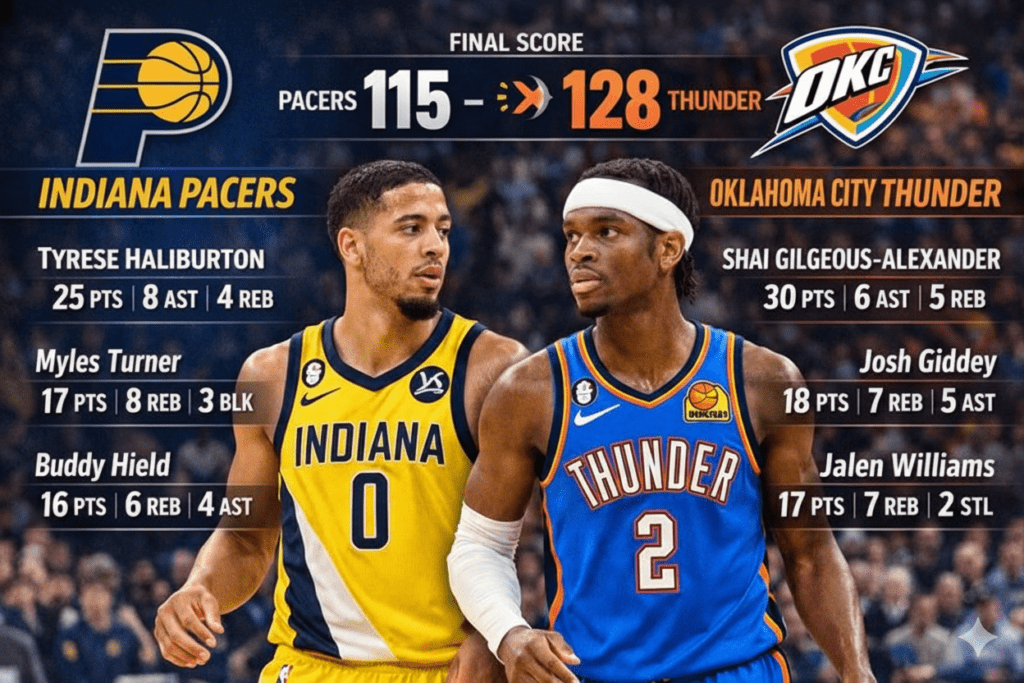 Match Stats
Indiana Pacers vs Oklahoma City Thunder Match Player Stats – Complete Breakdown
Basketball is a game full of energy, skill, teamwork, and exciting plays. Fans love watching...
 Match Stats
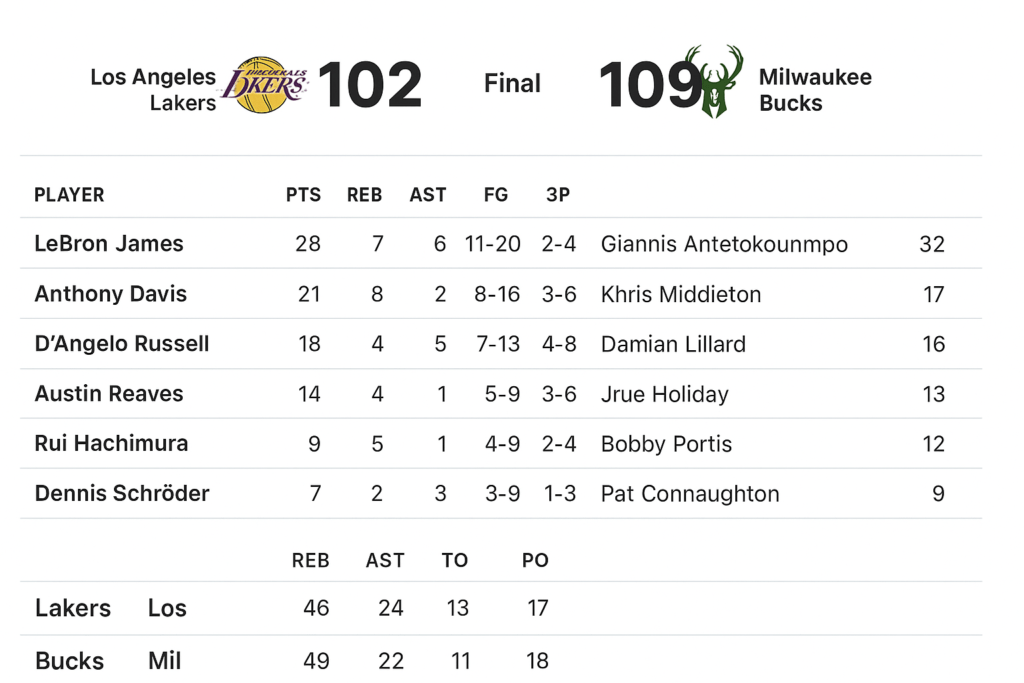
Lakers vs Milwaukee Bucks Match Player Stats Breakdown – Full Analysis & Key Performances
Introduction — easy guide to the box score and the match story This article will...
 Match Stats
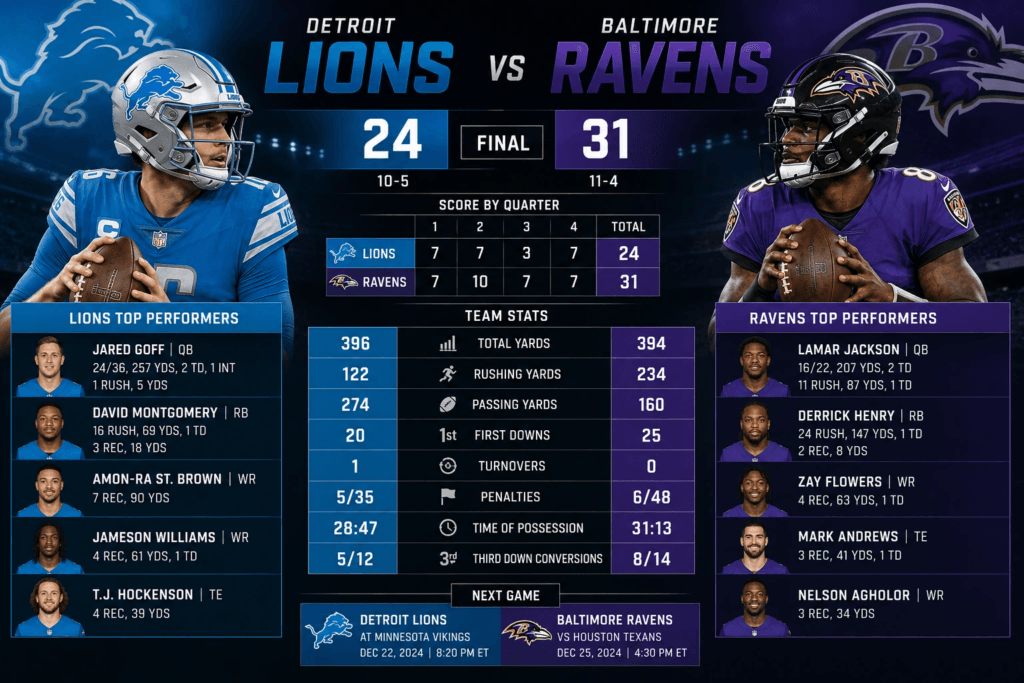
Detroit Lions vs Baltimore Ravens Match Player Stats
Detroit Lions vs Baltimore Ravens Match Player Stats: Who Controlled Every Phase of the Game?...